
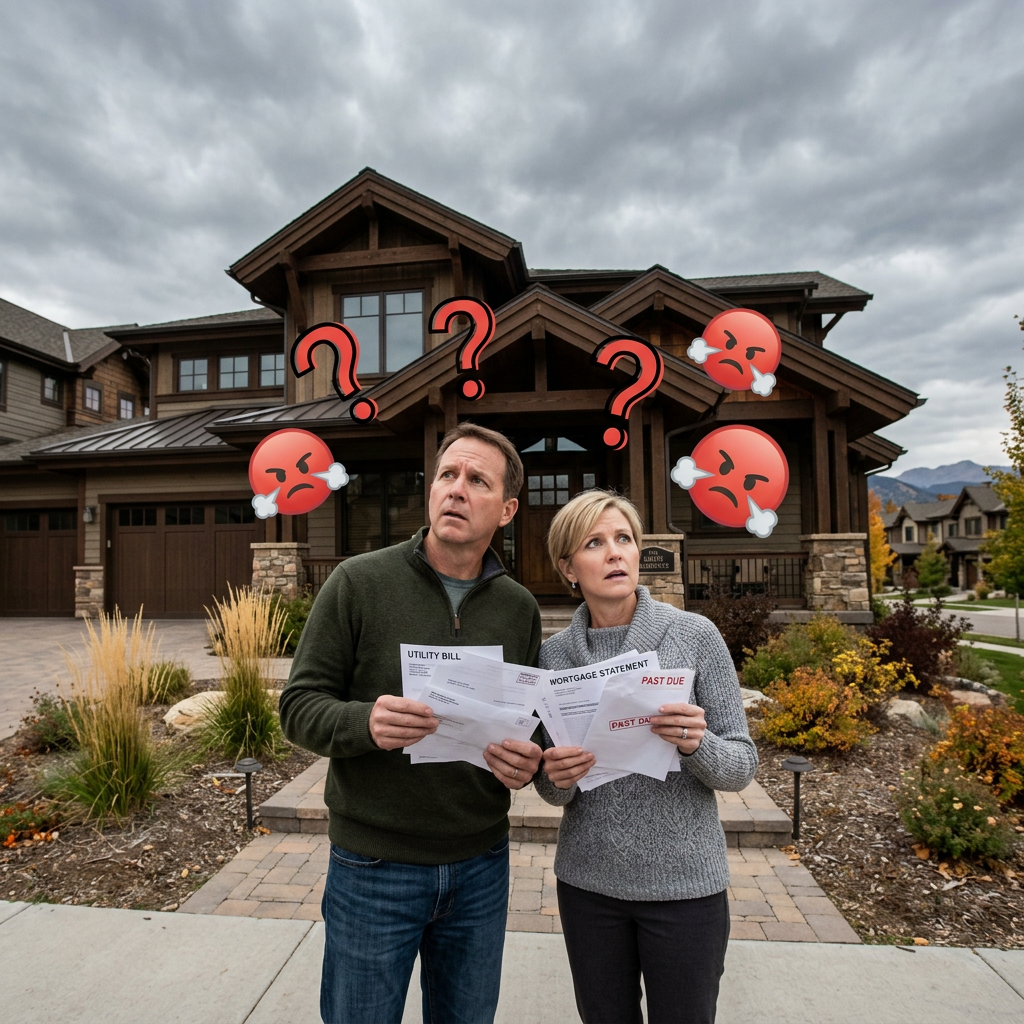
How Much House Can I Actually Afford as a First-Time Home Buyer in the Denver Metro?
If you’re buying your first home, there’s something your Realtor should be helping you understand before you start falling in love with houses online:
Affording the mortgage and affording the home are not always the same thing.
Your lender can help determine how much you may qualify to borrow.
That’s important.
But I want my first-time buyers thinking one step further:
What is this house actually going to cost me to OWN every month and every year?
Because when you’ve been renting, there are expenses you’ve probably never had to think about.
The refrigerator stops working?
Call the landlord.
The furnace quits?
Call the landlord.
The roof starts leaking?
Call the landlord.
When you buy the house?
You are the landlord.
That shouldn’t scare you away from homeownership.
It should change how you prepare for it.
Your Maximum Preapproval Is Not Automatically Your Budget
One of the first mistakes I want first-time buyers to avoid is treating their maximum mortgage approval like a spending target.
If a lender says you may qualify for a $600,000 home, that doesn’t automatically mean I want to start sending you $600,000 listings.
I want to know:
What monthly housing payment are you actually comfortable with?
And then:
What other costs come with owning the type of house we’re looking at?
The Consumer Financial Protection Bureau makes the same distinction when discussing affordability: buyers should consider their total monthly home payment along with maintenance, repairs, utilities and the amount they want to continue saving after they become homeowners.
That’s a much more useful conversation than simply asking:
“What’s the most the bank will give me?”
I don’t want to help you buy the most expensive house you’re technically capable of financing.
I want to help you buy a home that still makes sense once you’re actually living in it.
Your Mortgage Payment Is Only Part of the Cost
This is something first-time buyers should have explained to them early.
When you’re looking at a home online and see an estimated mortgage payment, make sure you understand what that number includes.
Your total housing payment may involve:
- Principal
- Interest
- Property taxes
- Homeowners insurance
- Mortgage insurance, if applicable
- HOA dues, if applicable
Taxes and homeowners insurance are often collected through an escrow account as part of your mortgage payment. HOA dues, however, are commonly paid separately.
And then we haven’t even gotten to maintaining the property.
That’s why I don’t want a first-time buyer saying:
“The mortgage calculator says I can afford it.”
Okay.
What else comes with the house?
That’s the next question.
If There’s an HOA, Understand What You’re Actually Paying For
Around the Denver metro, you’re going to find everything from single-family neighborhoods with no HOA to communities with monthly dues, townhome associations and condos where the HOA takes on a much larger role.
An HOA isn’t automatically good or bad.
I want to know:
How much is it?
What does it cover?
What are you still responsible for?
A $500,000 condo with substantial monthly HOA dues and a $500,000 single-family home without an HOA are not the same financial decision, even though the asking price is identical.
And don’t assume an HOA payment is already included in the mortgage number you’re looking at. HOA dues are usually paid separately from your mortgage servicer.
For a first-time buyer, that can be an easy expense to overlook.
Remember: Someone Has to Maintain the Property
Let’s say you move from an apartment into your first single-family home.
Now you’ve potentially got:
Grass.
Landscaping.
Sprinklers.
Trees.
Snow.
Gutters.
Exterior maintenance.
Maybe a fence.
Maybe a deck.
None of those things individually mean you shouldn’t buy the house.
But ownership has a cost beyond simply making the mortgage payment.
Maybe you enjoy mowing your own lawn and shoveling your own driveway.
Great.
Maybe you’re paying someone else.
That’s an expense.
Maybe you’re buying a townhome where some exterior maintenance and snow removal are covered by the HOA.
Great.
But now we’re back to understanding that HOA payment.
Different properties create different ownership expenses.
That’s something I want you thinking about while we’re choosing the home — not six months after closing.
The Older the House, the More I Want You Looking at the Big Stuff
This becomes even more important when we’re looking at older properties or fixer-uppers.
A fixer-upper can be an incredible opportunity.
Maybe we’re buying below what a fully renovated property would cost.
Maybe you can improve the house over time and make it your own.
I’m completely open to that.
But I don’t want you spending your entire budget just getting the keys and then realizing the property needs significantly more money than you planned for.
So we’re going to look at things like:
How old is the furnace?
How old is the air-conditioning system?
How old is the water heater?
What condition is the roof in?
What do we know about the electrical and plumbing?
How old are the appliances?
What renovations are wants, and what repairs are actual needs?
This is also one of the reasons the inspection and due-diligence period matters.
We’re trying to learn as much as reasonably possible about what you’re taking ownership of.
Because once you own the property, repairs and maintenance become your responsibility. The CFPB specifically recommends that prospective homeowners account for unexpected repairs and major replacements when deciding what they can comfortably afford.
Appliances Will Eventually Break
This sounds obvious until you’re the person writing the check.
Your refrigerator isn’t going to last forever.
Neither is your dishwasher.
Neither is your washer and dryer.
Neither is your water heater.
And eventually larger systems in a house need maintenance, repair or replacement too.
That doesn’t mean all of those things are going to break during your first year.
It means homeownership requires preparation for things not going exactly according to plan.
That’s one reason I’m so big on first-time buyers not using every dollar they have just to close.
I Want You to Have Money Left After Closing
I’ve said this before and I’ll continue saying it:
I don’t want you getting the keys to your first house and having nothing left in the bank.
When reasonably possible, I like my buyers to have somewhere around $10,000–$20,000 left in reserves after the purchase.
That is my practical preference for financial breathing room — not a universal mortgage requirement.
Your situation may be different.
But the principle matters.
You’re going to move.
You may need furniture.
Something might need repairing.
An appliance might go out.
Your first utility bills may look different from what you’re accustomed to.
Life is also still going to happen outside of the house.
Cars still break.
People still take vacations.
Emergencies still happen.
Retirement still matters.
The CFPB specifically warns buyers not to sacrifice all of their savings simply to purchase a larger home and recommends continuing to plan for emergencies and other financial goals after buying.
I want homeownership to give you more opportunity — not make you feel trapped by the house you bought.
Don’t Forget About Utilities Either
If you’ve been renting an apartment, your utility experience may be completely different from owning a larger home.
A bigger property can mean different costs for:
Electricity.
Natural gas.
Water.
Sewer.
Trash.
Internet.
Heating and cooling.
The exact amount depends heavily on the property itself — its size, age, efficiency, systems and how you use the home.
That’s why two homes at the same price can still have different monthly ownership costs.
The CFPB includes utilities alongside maintenance, insurance, taxes and HOA dues as costs buyers should consider when determining how much home they actually want to purchase.
This Is Why I Don’t Want First-Time Buyers Shopping Strictly by Price
Imagine we’re comparing two houses.
House A costs a little less, but it has older systems, several projects you’re going to want to complete immediately and ongoing maintenance you’re not prepared for.
House B costs a little more, but the major systems are in better condition and it fits your lifestyle with fewer immediate expenses.
Which house is more affordable?
You can’t answer that from the listing price alone.
Or maybe House A still makes more sense because you’re comfortable doing some work and you’ve budgeted for it.
Perfect.
That’s the point.
We’re making an informed decision instead of assuming:
lower purchase price = cheaper home to own.
It doesn’t always work that way.
Your Realtor Should Be Helping You Think Beyond Closing Day
This is where I think the role of a good buyer’s agent goes beyond simply finding listings and writing an offer.
Of course I want to get you into the house.
But I’m also thinking:
What happens after I hand you the keys?
Does this payment make sense?
What’s the HOA?
What are you responsible for maintaining?
What did we learn about the condition of the house?
What expenses might be coming?
How much money are you going to have left?
Does this property still fit your life after we account for those things?
Because my job shouldn’t simply be:
Get Troy’s buyer under contract.
It should be:
Help Troy’s buyer make a smart real estate decision.
That’s a different mindset.
So, How Much House Can You Actually Afford?
For a first-time buyer, I wouldn’t answer that question using purchase price alone.
I’d start with something closer to this:
The mortgage payment you are comfortable with
+ Property taxes
+ Homeowners insurance
+ Mortgage insurance, if applicable
+ HOA dues, if applicable
+ Utilities
+ Expected maintenance and property upkeep
+ Room in your budget for repairs and eventual replacements
+ Money you still want to save every month
Then ask:
Does owning this particular home still fit comfortably into your life?
If the answer is yes, now we’re getting somewhere.
And if the answer is no?
That’s useful information too.
Maybe we adjust the price range.
Maybe we look at a different type of property.
Maybe we change neighborhoods.
Maybe we decide an HOA community actually makes more sense for your lifestyle.
Maybe we keep more cash in reserves.
That’s what planning is for.
First-Time Buyers: You Don’t Have to Figure This Out Alone
If you’ve never owned a home before, I don’t expect you to know the lifespan of a furnace.
I don’t expect you to immediately understand escrow.
I don’t expect you to know what an HOA is responsible for.
I don’t expect you to know how much money you should keep in reserves.
You should have somebody helping you think through those things.
That’s part of the value I want to bring to my clients.
If buying a house is what you want, I’m not just here to unlock the door and ask:
“So…what do you think?”
We’re going to look at the bigger picture.
Because buying your first home should be exciting.
But it should also make financial sense after the excitement wears off and you’re the one responsible for the property.
Thinking About Buying Your First Home in the Denver Metro?
If you’re preparing to buy your first home in Aurora, Lakewood, Highlands Ranch, Parker, Centennial, or elsewhere throughout the Denver metro, download my FREE Home Buying Roadmap.
I’ll walk you through what to expect from preparing your finances and building your home search through offers, inspections and closing.
[DOWNLOAD MY FREE HOME BUYING ROADMAP]
And if you’re trying to figure out what price range actually makes sense for you, schedule a Residential Buyer Consultation with me.
We’ll talk about your goals, your monthly comfort level and the type of home you’re considering — and I’ll connect you with one of the lenders I trust so we can build the search around what makes sense for your life, not simply the maximum number on a preapproval letter.
Homeownership costs vary significantly by property, location, loan program, insurance coverage, HOA, utilities and the condition of the home. Mortgage qualification decisions should be discussed with a qualified lender, and buyers should independently evaluate their personal financial circumstances.
Leave a Reply